
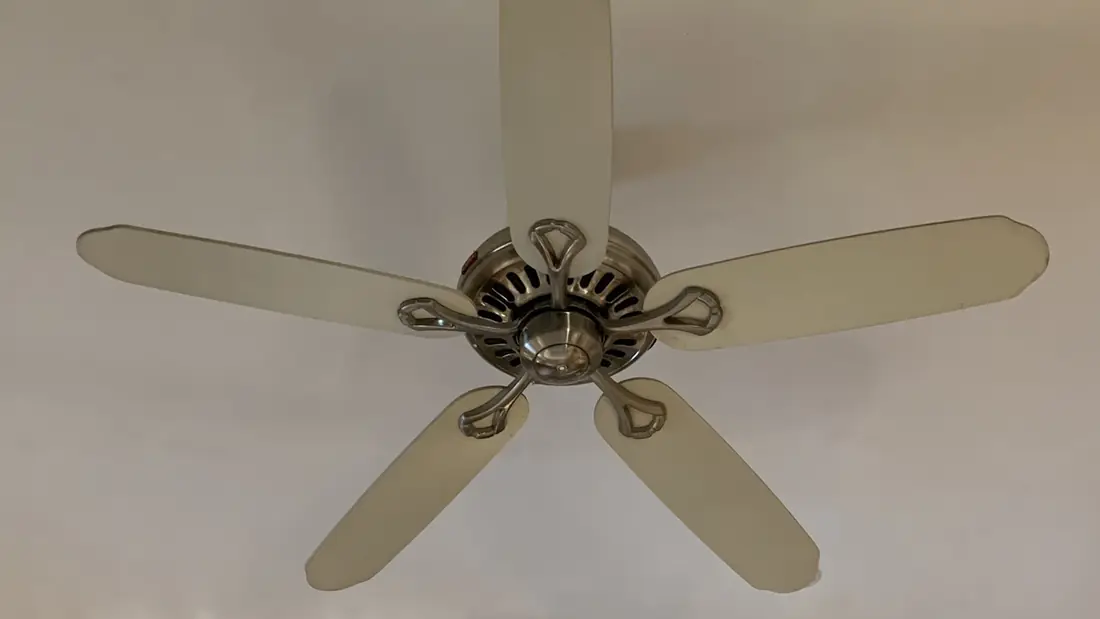
A ceiling fan in Central Florida is not decoration, it is a cooling strategy. Moving air lets you hold the thermostat several degrees higher for the same comfort, which is real money over a Florida summer.
The installation detail that matters most is invisible once the fan is up: the box. A standard lighting outlet box is not rated to carry a fan, and a fan hung from one will eventually work loose from the vibration. Every fan we install goes on a listed fan-rated box or a proper brace, without exception.
We also handle the awkward ones. Vaulted and two-storey ceilings, sloped mounts, lanais and covered patios that need damp or wet-rated fans, downrod sizing, and remote or wall-control wiring where there is only one switch leg in the box.
Many customers pair ceiling fans with lighting installation and residential electrical. Not sure where to start? Read signs you need an electrical panel upgrade in Polk County.
Serving Polk County: Lake Wales, Winter Haven, Bartow, Haines City, Lakeland, Dundee, Frostproof, Auburndale, Polk City, Davenport, Fort Meade, Lake Alfred, and the surrounding Central Florida communities. Call (863) 676-0198 to book.
When A Fan Needs Attention
- Wobble that has appeared or got worse over time
- A humming, clicking, or grinding noise from the motor
- The fan only runs on certain speeds, or the remote is unreliable
- Visible movement in the canopy or the mounting when it runs
- A fan on an outdoor lanai that is rusting or has warped blades
- A fan installed on a box you are not sure is fan-rated
“Kincaid did an excellent job adding outlets to my garage apartment. Their final fee matched their quote and they cleaned up and it was like they were never there!! (Except for the new outlets) Can’t stress enough the value of an honest electrician!”
What Goes Into Ceiling Fan Installation Cost?
Ceiling fan installation cost varies because the jobs vary. The easy end is a like-for-like swap where a fan-rated box and switch already exist. The harder end is a room with only a light fixture, no support, or no wiring at all. In between sit ceiling height, sloped mounts, the need for a new switch leg, and whether you want remote or wall control rather than pull chains.
It also helps to say whether the fan is already assembled or in the box, and whether it has a light kit. Those things change the time on site. We prefer to see the room before quoting, because what is above the ceiling decides more than the fan itself. You get a clear price for the actual work, and we tell you if anything in the ceiling needs correcting along the way.
Ceiling Fan Installation In Lakeland, FL: Rooms That Benefit Most
Ceiling fan installation in Lakeland tends to focus on the rooms where you spend the most time in summer: bedrooms, living rooms, and covered porches. A fan moves air across skin, which makes the room feel cooler without lowering the temperature. That lets many households keep the air conditioner setting a little higher during the hottest months. It also lets you run the air conditioner less often on mild afternoons.
Size and placement matter, and we help you choose before you buy. A fan that is too small for a large room does little, while one that is too big can overpower a small bedroom. Blade clearance from walls and a safe height above the floor are also part of the plan. In rooms with ceilings that are high, we use a longer downrod so the blades sit where they move air through the living space rather than near the ceiling.
Ceiling Fan Installation In Winter Haven, FL, When There Is No Existing Wiring
Ceiling fan installation with no existing wiring is a common request in Winter Haven homes with sunrooms, additions, and bedrooms that were built with only a wall outlet. The job starts with finding a power source, then running cable to a new ceiling location and to a switch. Attic access makes this fairly direct. A finished ceiling with no access takes more planning and sometimes small repairs to the drywall.
The box is the other half. A fan needs a listed fan-rated box fastened to structure, such as a joist or a purpose-made brace between joists. We install that as part of the job, so the fan is carried properly from day one. When the circuit is already near its limit, we say so and discuss options. A permit may apply for new wiring, and we handle that when it does.
Outdoor Ceiling Fan Installation For Lanais And Covered Patios
Outdoor ceiling fan installation in Florida starts with the rating on the box. A damp-rated fan suits a covered lanai where rain rarely reaches it. A wet-rated fan is needed anywhere that wind-driven rain can hit the blades and motor. Using an indoor fan outside leads to rust, warped blades, and a motor that gives up long before it should.
Outdoor circuits have their own requirements, including protection against shock and weatherproof connections. Mounting height and blade clearance matter on a lanai, since many have lower ceilings than the house. We also plan for the control. A wall switch or remote saves reaching for a pull chain, and a separate light switch keeps the fan and light independent. The goal is a fan that works through the summer and holds up through storms.
Ceiling Fan Wobble Repair: Finding The Real Cause
Ceiling fan wobble repair begins with a few simple checks. Loose blade screws, a bent blade holder, or uneven blade weight are the most common causes, and a balancing kit often fixes them. A fan that still shakes after that points to a problem higher up, such as a loose downrod, a worn motor mount, or a box that moves in the ceiling.
That last cause is the one that matters for safety. A box that is not fan-rated or not fastened to structure can loosen over time, and a fan that wobbles on it can eventually come down. If you can see the canopy shifting when the fan runs, turn it off and call us. We inspect the box, replace it with a proper fan-rated support when needed, and then rebalance the fan.
Ready to book ceiling fans?
Licensed, family owned, and working out of Lake Wales since 1973. Upfront pricing, and a real person on the phone.
Other Residential Services
Ceiling Fans Across Polk County
The same crew covers the whole service area. Pick your city for local detail, or just call us.
Lake Wales/Winter Haven/Bartow/Haines City/Lakeland/Dundee/Frostproof/Auburndale/Polk City/Davenport/Fort Meade/Lake Alfred
Ceiling Fans FAQs
Can you put a fan where there is only a light fixture now?
Yes, but the box almost certainly has to be replaced with a fan-rated one, because standard lighting boxes are not built to carry the weight or the vibration. If the ceiling has attic access above it, that is a straightforward job.
What about my two-storey great room ceiling?
We do those regularly. It needs the right downrod length so the blades sit at an effective height, proper equipment to reach it safely, and usually a remote or wall control since a pull chain is not much use twenty feet up.
Can I put a regular fan on my lanai?
No. Covered outdoor spaces need a damp-rated fan at minimum, and anywhere exposed to blowing rain needs wet-rated. Indoor fans in those locations rust, seize, and warp within a season or two of Florida weather.
Do you install fans I bought myself?
Yes, that is most of what we install. Have the box and the mounting hardware with it, and if it is going outdoors, check that it is rated for the location. We will flag it if it is not.
Is installing a ceiling fan worth it?
In Central Florida, yes, on running cost alone. Moving air lets most people hold the thermostat two to four degrees higher for the same comfort, and across a Florida summer that is real money against a fan that costs pennies a day to run. The caveat is that a fan cools people rather than rooms, so there is no point running one in an empty room.
Does installing ceiling fans increase home value?
Not usually as a measurable figure on an appraisal, but Florida buyers expect fans in bedrooms and living areas and notice when they are missing. Properly installed fans on rated boxes also avoid the inspection note that a wobbling fan on an unrated box attracts. Treat it as removing an objection rather than adding value.
Are ceiling fans difficult to install?
The wiring is not the hard part. What catches people out is confirming the box is fan-rated and properly fastened to structure, getting the downrod length right, handling the weight overhead safely, and wiring a remote or a separate wall control when the box only has one switch leg. A fan hung from a standard lighting box will work for a while and then work loose, which is the failure we get called back to most.
How long does it take to install a ceiling fan?
A straight replacement where the existing box is already fan-rated is usually well under an hour once the fan is assembled. Fitting a fan where there is only a light fixture takes longer, because the box has to be changed for a rated one. High ceilings, sloped mounts, a new switch leg, or a run to a room with no ceiling box at all can turn it into a half day or more.
Do ceiling fans really save energy?
The fan uses a fraction of what an air conditioner uses, so the saving comes from what it lets you avoid rather than from the fan itself. Raising the thermostat a few degrees because the air is moving is where the money is. Run it in reverse and slow in winter and it pushes warm air back down off the ceiling, which helps on the handful of cold Polk County mornings.
What if my ceiling fan wobbles after installation?
Have it looked at rather than living with it. Blade imbalance is the usual suspect and a balancing kit sorts it. In our experience the more common cause is a box that was never rated to carry a fan, or a rated box that is not properly fastened to structure. What you are watching then is the box moving in the ceiling, and balancing the blades only delays the problem.