
Published
A light that blinks once when the air conditioner starts is common. A light that flickers while you are sitting still, or a whole room that dims and comes back, is a different problem. The bulb is the cheap test. After that, the fault is usually in a connection, a dimmer, or the service that feeds the house.
Change the bulb before you change anything else
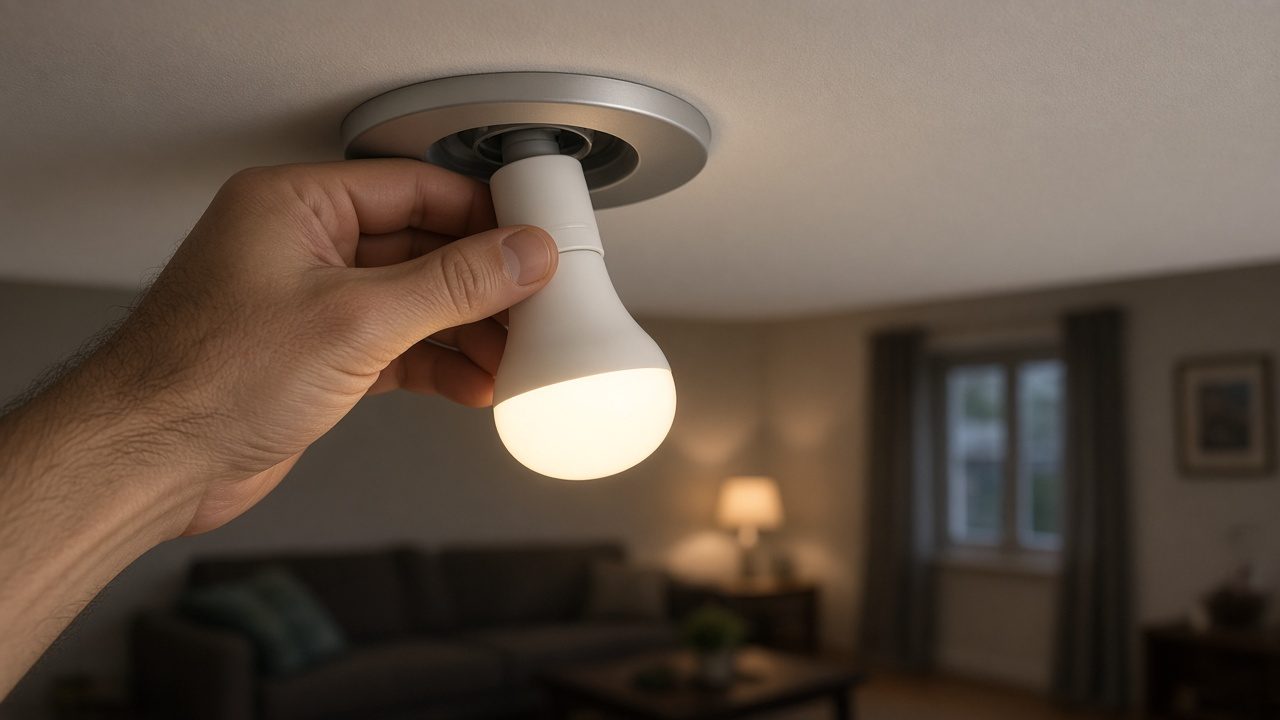
Put a known good lamp in that socket. If the flicker stops, the bulb or its driver was the fault. LED bulbs fail this way more often than the old incandescent ones. They can strobe, buzz, or go dim long before they go dark.
If the new bulb flickers the same way, leave it in and stop buying bulbs. The socket, the switch, or the feed to that room is next. A lighting installation visit is the right call when several fixtures on one switch do it together.
One lamp, or every light in the house
Write down the pattern. One lamp in one room points at that fixture or the switch that controls it. Every light in the house dipping at the same moment points at the service, the meter, or the utility connection.
Houses in Lake Wales, Winter Haven, and Lakeland see both. A single kitchen pendant is often a loose wire at the box. The whole house going dim for a second when a motor starts can be a weak connection at the panel or on the utility side. Those are not the same repair.
When the air conditioner kicks on
A brief dip when the compressor starts is the motor pulling a large current for a moment. Lights may dim and recover. That by itself is not a failed bulb.
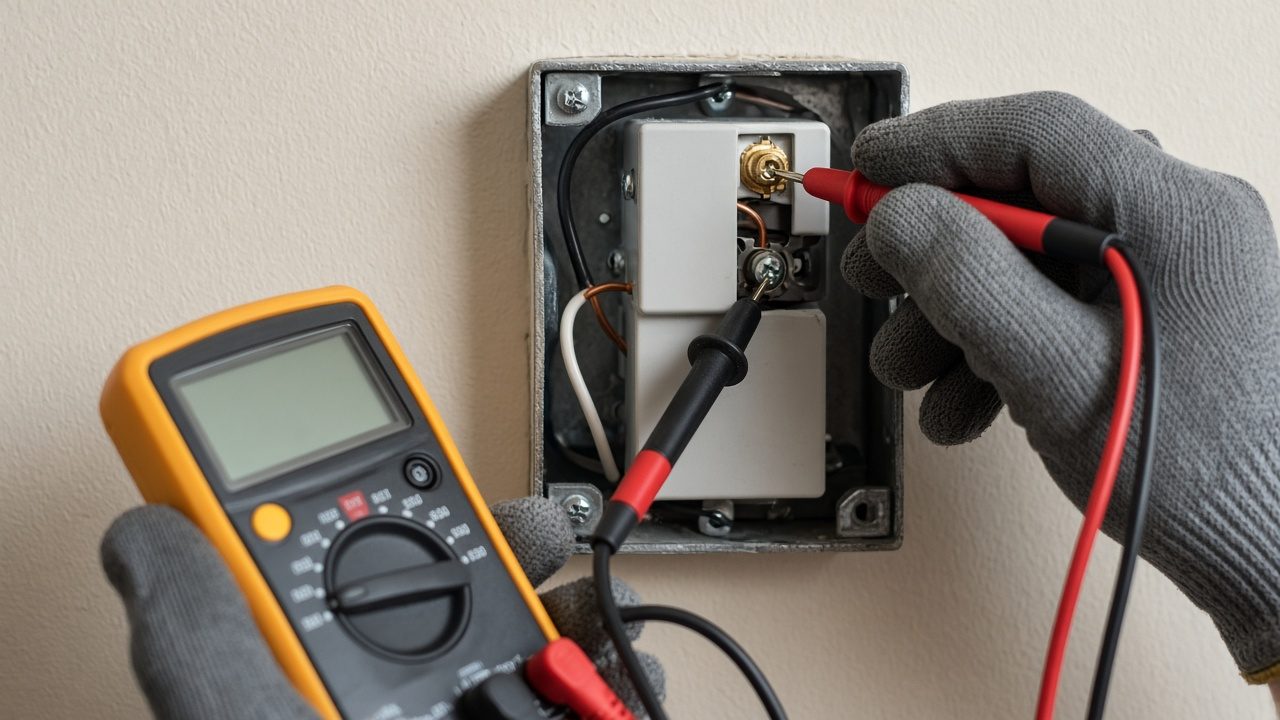
If the lights stay dim, the breaker buzzes, or the dip happens with smaller loads, the service is sagging. We measure voltage at the panel with the air conditioner starting. A reading that falls hard and stays low is a loose lug, a tired breaker, or a utility problem. Resetting nothing at the lamp will fix it.
A dimmer and an LED that do not agree
An old dimmer made for incandescent bulbs will make many LED bulbs flicker at the low end, or buzz at the high end. The bulb can be fine. The dimmer is sending a chopped wave the driver cannot use.
The match is printed on the dimmer and on the bulb box. If the flicker only happens on the dimmed fixtures, and plain switches in the same house are steady, start there. We replace the dimmer with one listed for LED loads. That is a short lighting installation job, not a service change.
A loose screw in the switch box
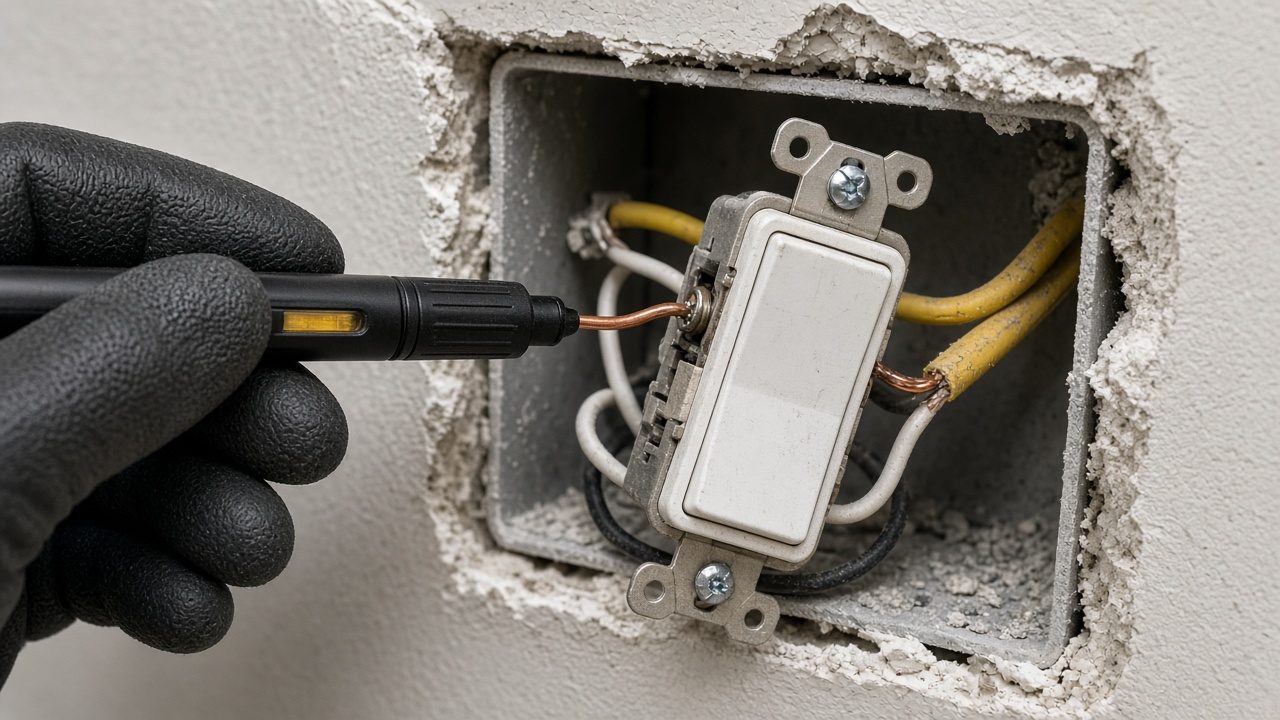
Flicker that comes and goes when someone walks the hall, or when the switch plate is warm, is often a loose termination. Backstabbed switches work loose over years. The light still works most of the day. The connection heats when the load is on.
Turn that switch off and leave the fixture unused if the plate is hot or you smell warm plastic. On an electrical repair visit we open that box and the fixture box. The bad splice is often one device back from the lamp you noticed.
The whole house dims, then comes back
If lights in more than one room brighten and dim with no switch touched, stop using the large appliances and call. A loose neutral at the panel or at the weatherhead can put too much voltage on one half of the house and too little on the other. Motors and electronics on the high side get damaged. This is not a bulb problem and it is not a job for the switch box.
Do not open the panel to tighten lugs. Tell us whether it started in a storm, after a tree limb hit the service drop, or with no warning. We test both legs and, if the fault is on the utility side of the meter, we say so before any repair is priced. That call is electrical troubleshooting, and it should not wait for a free afternoon.
Recessed lights that flicker together
A row of can lights on one switch will flicker together when the connection at the first can, or at the switch, is loose. Changing the bulb in the one you notice does not fix the row. The splice that feeds the rest of the cans is usually in the first fixture or in the switch box.
If those cans were added in a remodel and the flicker showed up the same week, the new joints are the first place we look. A lighting installation that lands the conductors under screws, not in a backstab, holds. We open the cans that are easy to reach before we start opening drywall.
Flicker that starts the day after a storm
A strike down the road, or the moment the utility closes the line back in, can weaken a connection that was already loose. The lights may work that night and flicker the next day. A surge protector at the panel does not repair a loose lug. It only clamps the next spike.
Look for a breaker that will not sit firmly on or off, a meter base that buzzes, or a neighbor with the same complaint. If the neighbor has it too, call the utility and call us. If only your house has it, the fault is on your side of the meter. That is often the start of a panel upgrade, not a new bulb.
The same flicker in a shop
A sales floor or a small kitchen that flickers when a cooler, a mixer, or a parking lot light comes on is the same voltage sag, with a business attached to it. Staff will keep resetting things and customers will notice. We want the visit while the equipment is running, not after closing when the load is gone.
Commercial lighting on a tired circuit will strobe even when the lamps are new. We measure at the panel and at the last fixture. If the drop is only at the end of the run, the repair is that circuit. If the whole building sags, the service is the conversation.
What to tell us when you call
Which rooms, whether it is one lamp or the whole house, whether a motor was starting, and whether any plate or plug feels warm. Shop hours are Monday through Friday, 7:30 AM to 4:30 PM. The number is (863) 676-0198, or use the contact page. Florida master license EC0000873. The shop is at 15510 Hwy 27, Lake Wales, FL 33859.
More from us: all electrical services and the cities we serve.