
Published
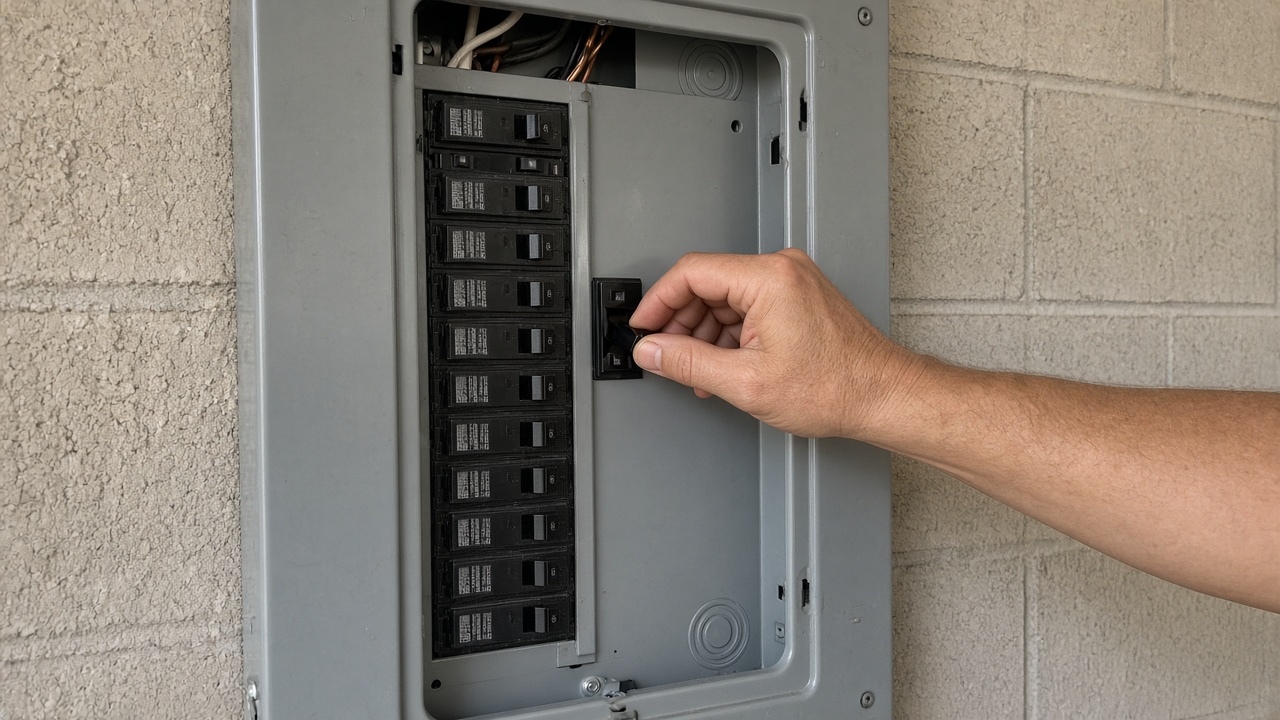
A breaker that will not stay on is doing the job it was built for. It opened because that circuit was about to carry more than the wire can take, or because current was leaking where it should not. Reset it once. If it opens again, leave it off and unplug what was running. Resetting it all afternoon heats the breaker and the bus bar it clips onto.
Three reasons a breaker opens
On the calls we take from Lake Wales, Winter Haven, and Lakeland, the cause falls into one of three groups.
An overload means the circuit is carrying more equipment than it was sized for. A short means two conductors are touching, often where a cable was nicked at a stud or a box. A ground fault means current is leaking to a grounded part, which is common once rain or a humid garage gets into an outdoor box.
The timing is the useful clue. Write down what was running, which rooms went dark, and whether it was raining. That note shortens the diagnosis on an electrical repair visit.
Microwaves, toasters, and space heaters
A lot of these trips start in the kitchen. A microwave and a toaster on the same 20 amp circuit will open the breaker the moment both heating elements are on. The circuit is fine. It was never meant to run both at full draw.
A plug-in space heater is the other regular one. Many of them pull close to the whole capacity of a bedroom circuit by themselves. Add a hair dryer or a window unit and the breaker opens. Moving the heater to another room only moves the load. If the same breaker opens with ordinary lamps and a television, the circuit itself needs a look. A larger breaker on the same wire removes the protection.
When the air conditioner is the breaker that opens
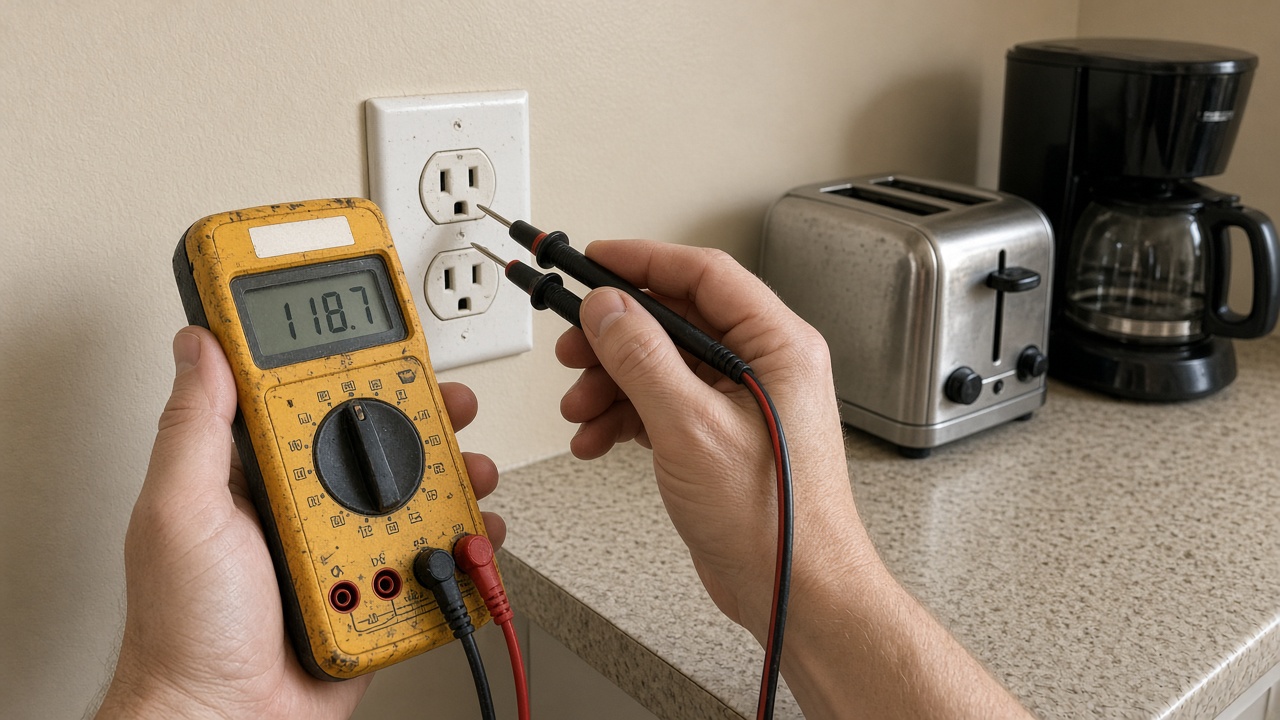
An air conditioner breaker that opens once on the first hot afternoon is worth watching. One that opens every time the compressor starts is a different call. Dirty coils, a weak capacitor, or a compressor that is locking up belong to the HVAC company. A loose connection, a breaker that trips below its rating, or a service that sags when the compressor starts belong to us.
Stop resetting that breaker. Each reset on a real fault puts more heat into the breaker and the lugs. If the breaker handle is warm, or the panel buzzes when the air handler starts, leave it off and call. Houses that trip only when the second system or a pool pump comes on are often out of capacity, which is a panel upgrade question.
A GFCI that will not stay reset
A GFCI compares the current going out with the current coming back. If a few milliamps are missing, it opens. That missing current is often going through a wet box, a damaged cord, or a person. Kitchens, baths, garages, and outdoor receptacles in Polk County houses are where we find them.
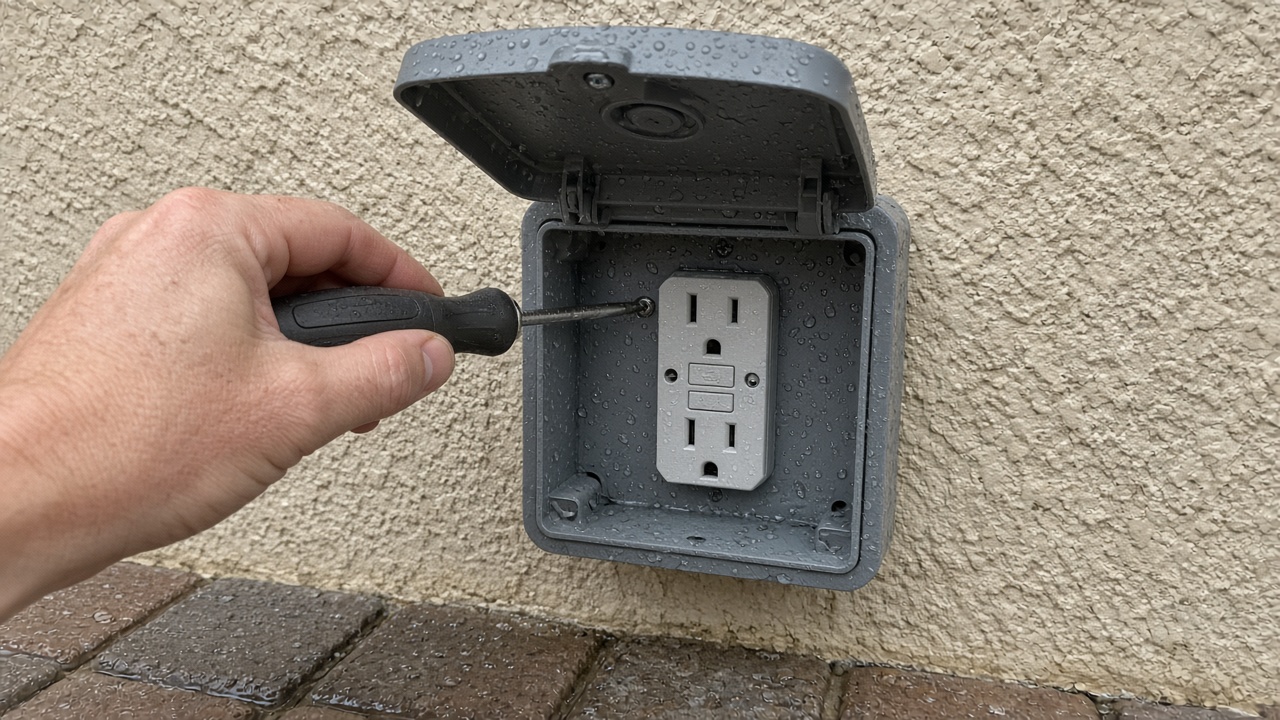
Unplug everything on that circuit, including the garage door opener and the freezer if they are on the same GFCI, and press reset once. If it holds, plug things back one at a time. If it opens with nothing plugged in, the device or the cable in the wall is the fault. Moisture in an exterior box after a summer storm does this often. Replacing the face of the outlet and leaving the wet splice behind puts the trip right back.
AFCI trips that seem to have no pattern
An AFCI is looking for the spark signature of a loose or damaged wire. A real arc in a backstabbed outlet or a nicked cable should open it. Some LED drivers, vacuum motors, and treadmills also imitate that signature and open a healthy breaker. That is still a reason for a test. Taking the AFCI out leaves the bedroom circuit without the protection the code required when the panel was built.
If the AFCI opens at random and you smell warm plastic, or one outlet on that run is discolored, stop using the circuit. Those are the signs we treat as a same-week electrical repair.
The same pattern in an open shop
A breaker in a restaurant or a small warehouse usually opens for the same three reasons, with a motor added to the list. A cooler or a mixer that only faults under load will pass a quick check when the kitchen is quiet. We want the visit while the equipment is running. That is the point of a commercial troubleshooting call: trace the circuit as it is wired, test it under the load that causes the trip, and price the repair after the cause is known.
A plug that feels warm
A breaker that stays on can still be hiding a bad connection. A plug that is warm, a brown halo around the slots, or a switch plate that is hot is heat at a loose terminal. The breaker may never open, because the current is still under the rating of the wire. The heat stays in that box.
Unplug that device and leave the outlet unused. On the visit we test that device and the ones on either side of it. The failed connection is often one receptacle back, not the one that looks burned.
Rain and the box on the outside wall
A breaker that opens on wet afternoons usually points outside. The weatherproof cover on a Polk County house fills with water, the gasket hardens, and the GFCI in that box starts to leak. The garage door opener and the freezer sometimes sit on that same device, so the kitchen looks dead when the fault is on the wall.
Open the cover and look for water before you reset anything. If the box is wet, leave the breaker off. Drying the face and leaving the wet splice in place puts the trip back on the next storm.
A larger breaker is the wrong part
The number on the breaker matches the wire, not the appliance someone wants to add. A 15 amp breaker on 14 gauge wire is the protection. Swapping in a 20 or a 30 so the handle will stay on lets that wire overheat inside the wall while the handle stays quiet.
If the kitchen truly needs the microwave and the toaster at the same time, the fix is another circuit, not a bigger breaker. That is planned work. We look at the panel first and say whether there is a space for it.
What to tell us when you call
Which breaker, what was running, whether it was raining, and whether anything smelled hot or felt warm. Shop hours are Monday through Friday, 7:30 AM to 4:30 PM. The number is (863) 676-0198, or use the contact page. Service calls are billed for the parts and the time it takes to find the fault. Florida master license EC0000873. The shop is at 15510 Hwy 27, Lake Wales, FL 33859.
More from us: all electrical services and the cities we serve.