
Published
Most searches for a surge protector land on a white strip for the television. That strip has a real job. It also leaves the rest of the house uncovered. The air handler, the well pump, the range, the water heater, and the garage door opener are hardwired. None of them plug into the strip behind the stand.
What the strip under the television covers
A strip with surge parts inside it clamps a spike on the outlets built into that strip. The lamp, the console, and the television can sit there. A plain power strip with no surge parts is only extra outlets, and it does nothing for a spike.
The parts inside a strip wear out. A unit that has taken several storms can look normal and no longer clamp anything. There is rarely a clear way to see that from the living room. And even a fresh strip never sees the circuits that feed the equipment in the garage, the attic, and the kitchen.
What we install at the panel
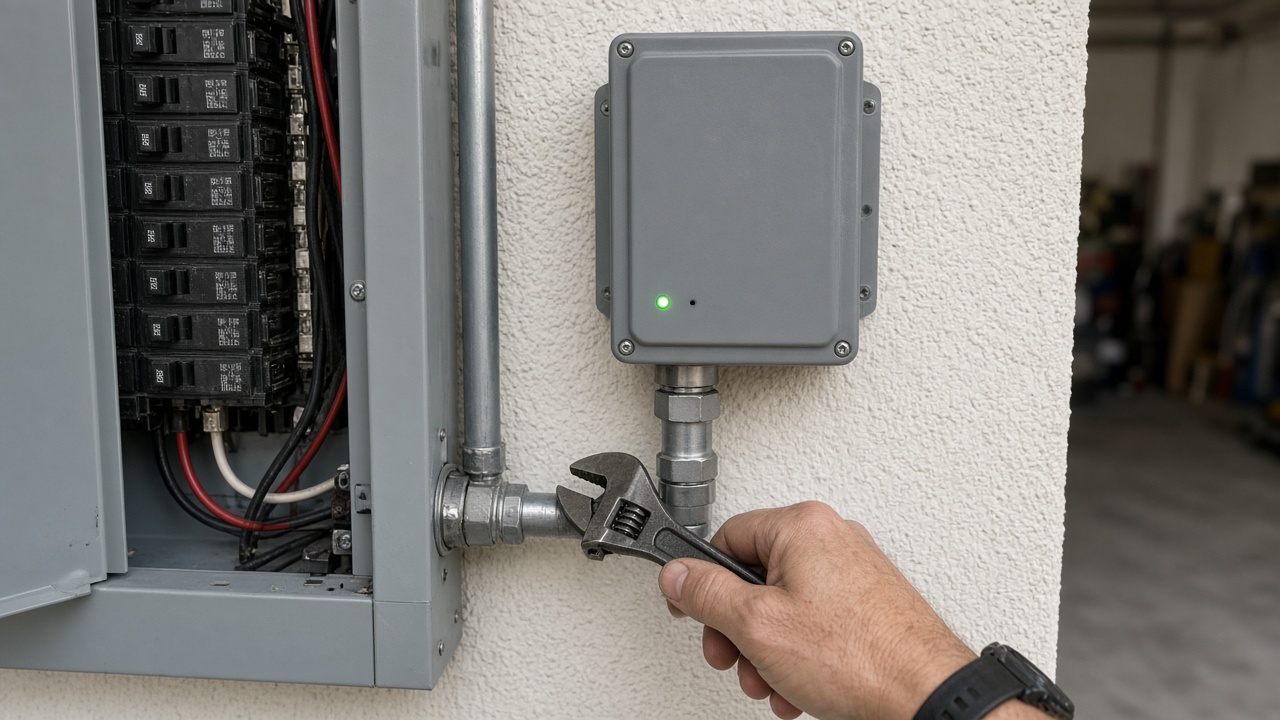
A whole-house device mounts at the service panel, on its own breaker, with short leads. A spike that comes in on the utility wires hits that device before it splits onto the branch circuits. Lead length matters. A long floppy whip lets more voltage through than a short, straight connection.
The device also depends on a grounding system that can take the energy. We check the bond and the grounding electrode before we land it. A protector on a panel with a broken ground rod is a box with a light on it. That check is part of surge protection for houses and for shops that are already open.
How a spike reaches a house here
Polk County does not need a direct hit on the roof. A strike on a line down the road, and the switching that follows when the utility restores power after an outage, both push a spike in at the meter. Summer afternoons do this often enough that we see cooked control boards in air handlers every season, including in houses that had a strip on the television the whole time.
Lake Wales, Dundee, and Winter Haven houses with a well are exposed in a second place. The pump controller is hardwired. So is a variable-speed air handler. Those boards cost more than the protector, and they sit on circuits a living-room strip never touches.
When the strip is already burned
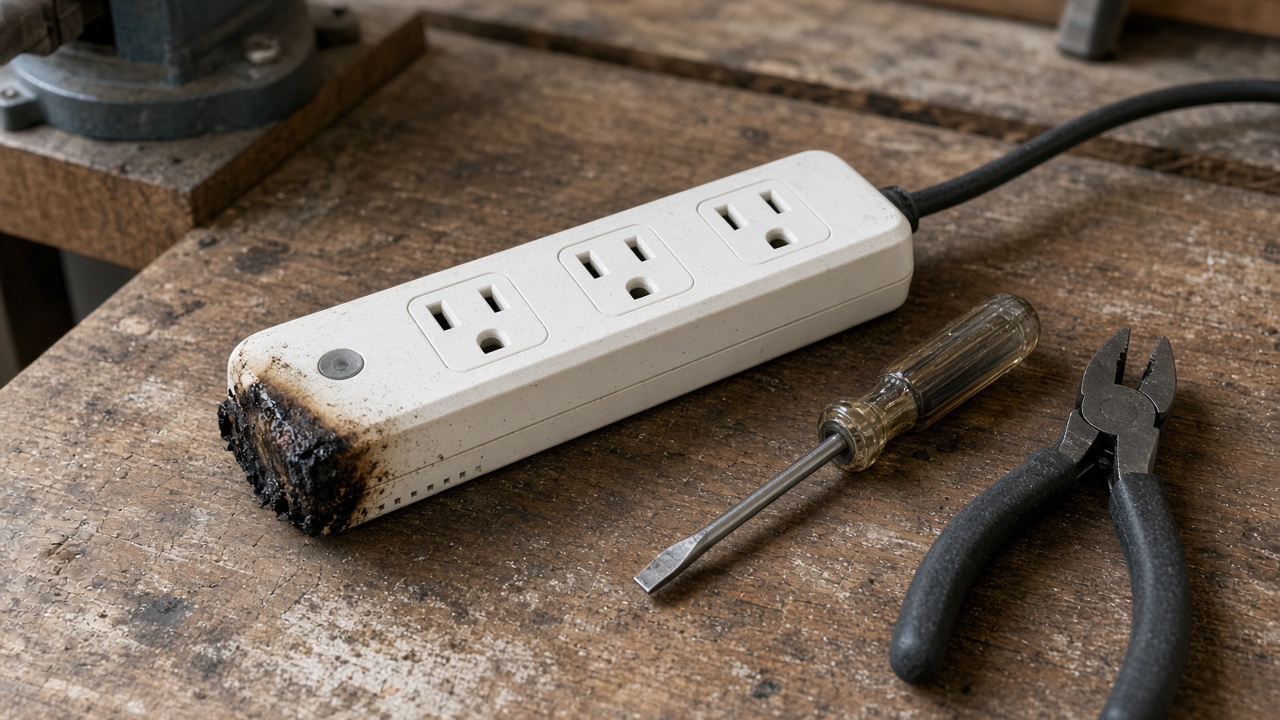
A scorched end, a soft case, or a status light that stays dark means that strip has finished its job. It will still pass power. It will not clamp the next spike. Unplug it. Do not keep it in service as a plain set of extra outlets.
Treat the burned strip as a clue, not as the whole repair. The television on that strip may be fine. The air handler board may already be damaged, because the strip never saw that circuit.
The board in the air handler
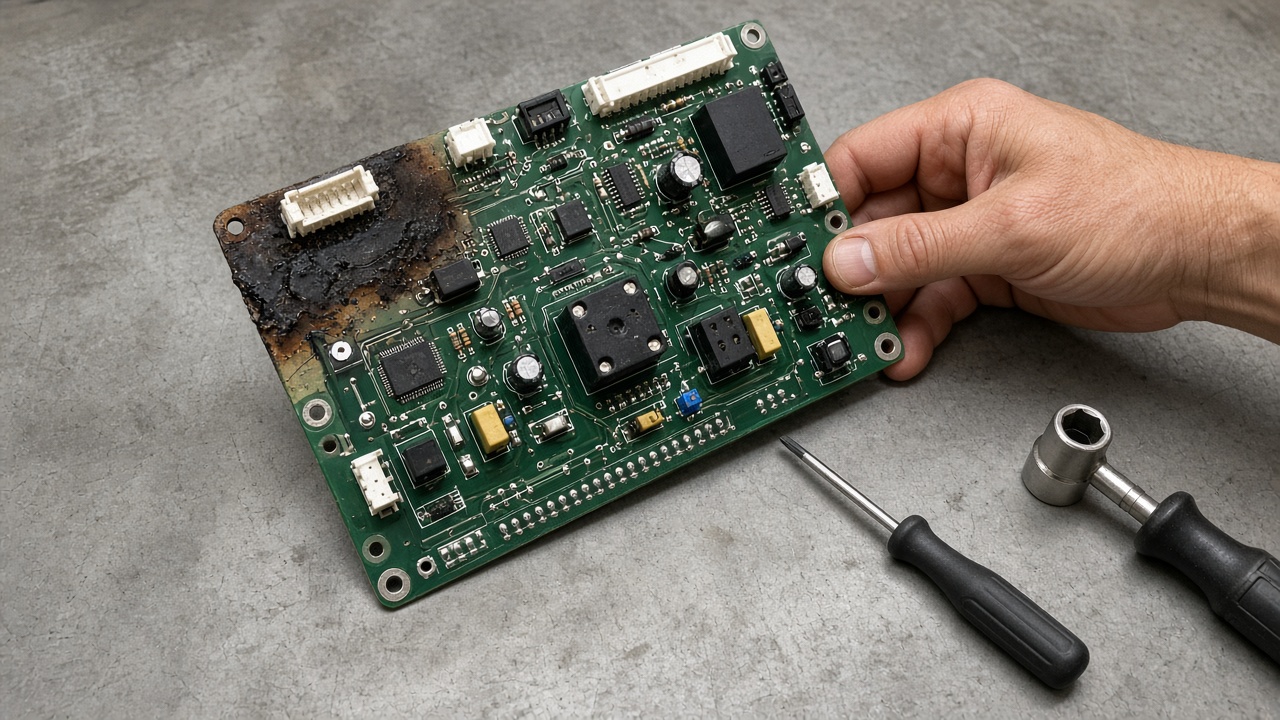
The part we see fail after a summer storm is often the control board in the air handler. On a house with a well, the pump controller in the garage fails the same way. Both are hardwired. A strip under the television never touches them.
A board with a burned corner is an electrical repair. If the panel can take a protector, that device goes on after the failed board is handled, so the next spike has somewhere to go.
The ground has to be able to take it
The device sends the extra energy into the grounding system. A loose bond, a broken clamp on the ground rod, or a rod that was cut off when a patio went in leaves the protector with nowhere to send the spike. We look at that connection before we land the leads.
If the rod or the bond is gone, that repair comes first. A green light on a device with no ground is not protection.
When the panel cannot take the device
The install needs a two-pole space, or a panel that can accept the device the manufacturer lists for it, plus a grounding system in decent shape. A panel that is full, rusted from a wet meter can, or still a fuse box is the wrong place to hang a protector and hope.
In that case the protector waits. We say so on the visit. The signs are the same ones in our notes on an electrical panel upgrade: no spaces left, rust, a warm main, or a brand an insurer has already asked about. A panel upgrade is a permitted service change. The surge device can go on with that work, or after it, once there is a place to land it.
The light on the device
After the install we show you the indicator. A green light means the protector is still in service. When that light goes dark or changes, the device has absorbed what it can and needs to be replaced. It does not reset like a breaker. Glance at it when you are already in the garage, and after a bad storm.
A protector at the panel and a strip at the television are two layers. The panel device takes the large spike at the service. The strip is there for what is plugged into the stand.
If a storm already damaged equipment
A dead air-handler board, a garage door opener that no longer answers, or outlets that died on one wall after lightning are an electrical repair, not a protector sale. We find what failed and bill the visit for parts and time. If the damage is in an occupied shop, and you want the panel scanned while the building is drawing load, that is electrical maintenance.
Call Monday through Friday, 7:30 AM to 4:30 PM, at (863) 676-0198, or send the details on the contact page. The shop is at 15510 Hwy 27, Lake Wales, FL 33859. Florida master license EC0000873.
More from us: all electrical services and the cities we serve.