
Published
After a storm, the search is how to run the house from a generator. The unsafe version is a cord with two male ends, or a dryer outlet used backwards. That can put voltage on the utility lines and on the lugs inside your panel. The hookup we install keeps the generator and the utility from being on together.
A cord into an outlet is the wrong hookup
Backfeeding means the generator is pushing power into the house through a receptacle, with the main breaker still able to pass that power out to the utility. A lineworker can meet that voltage on a line they thought was dead. The same setup can energize parts of the panel you did not mean to run.
Do not build a cord with a plug on both ends. Do not turn the main off and trust that you will remember the order every time the lights go out. The hardware has to make the wrong order impossible.
The inlet on the outside wall
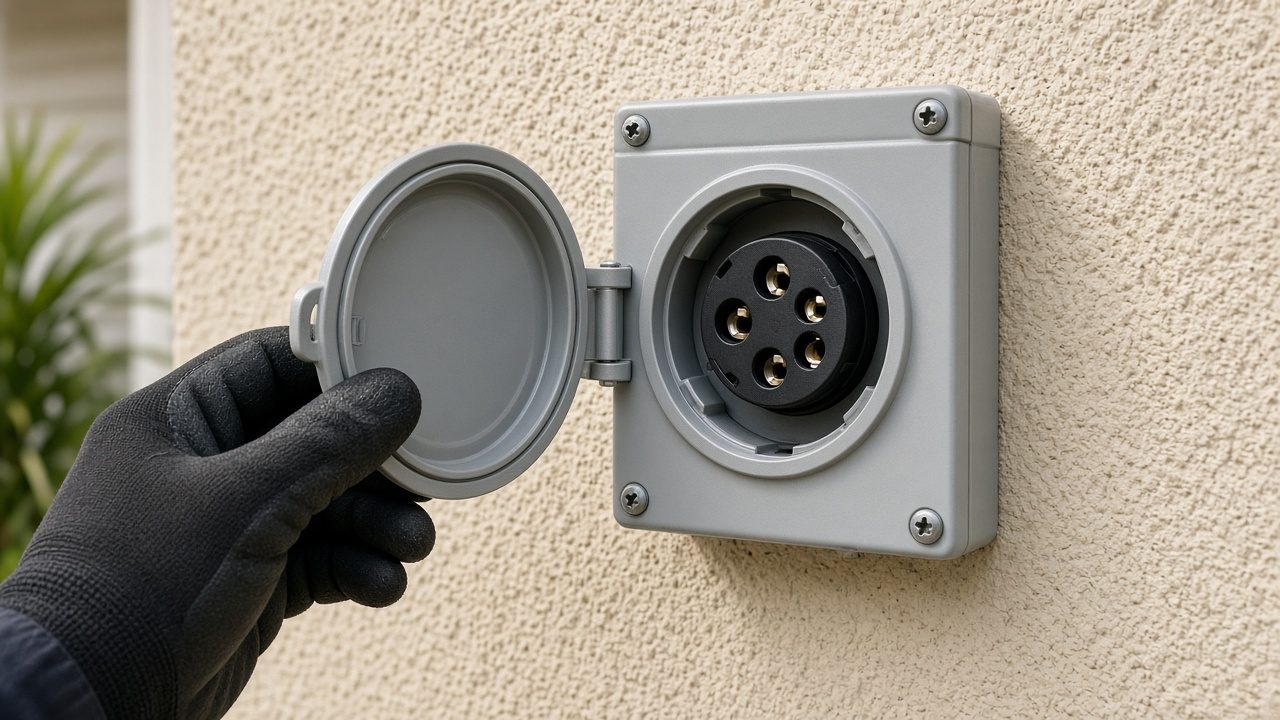
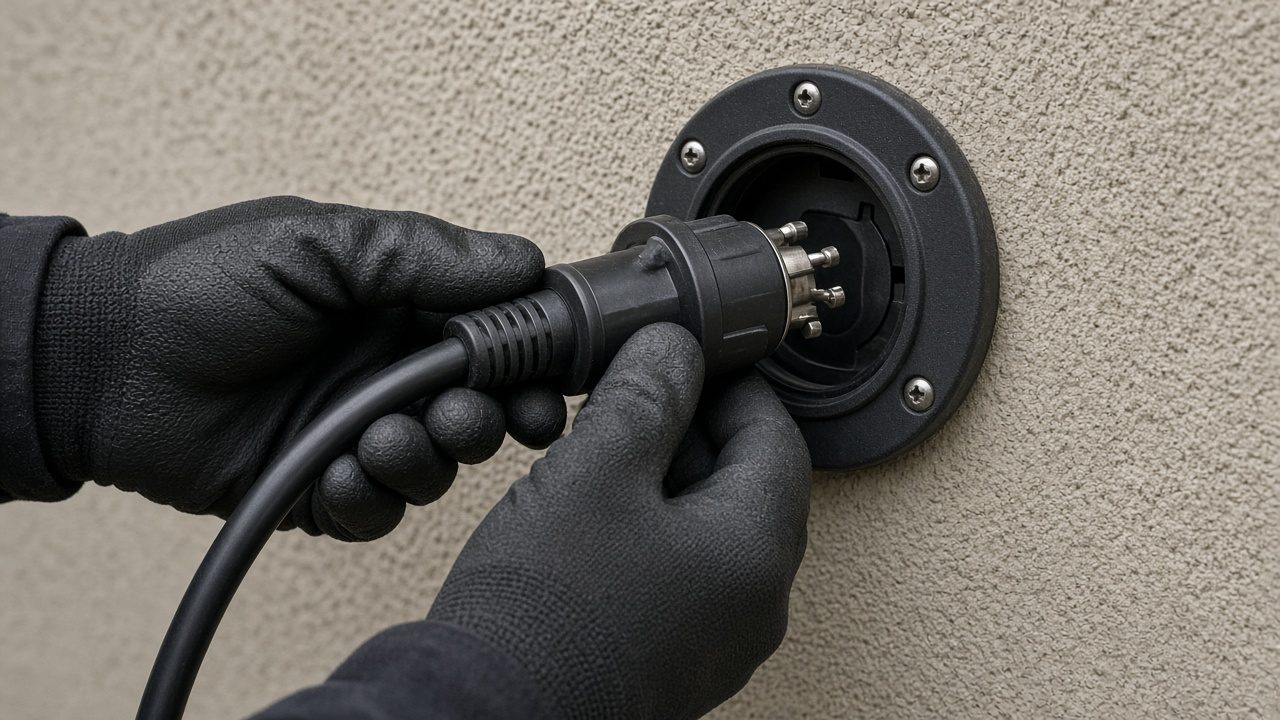
The inlet is a weatherproof box on the outside wall. The generator cord plugs in there. The conductors from that box run to a breaker in the panel. The generator stays outside, with the exhaust pointed away from doors and windows.
The inlet rating has to match the generator and the cord. A 30 amp inlet and a 50 amp cord are not a pair. We size the inlet, the breaker, and the wire together. The cord is the one piece you can buy yourself. The box and the wire are the generator installation.
An interlock, or a transfer switch
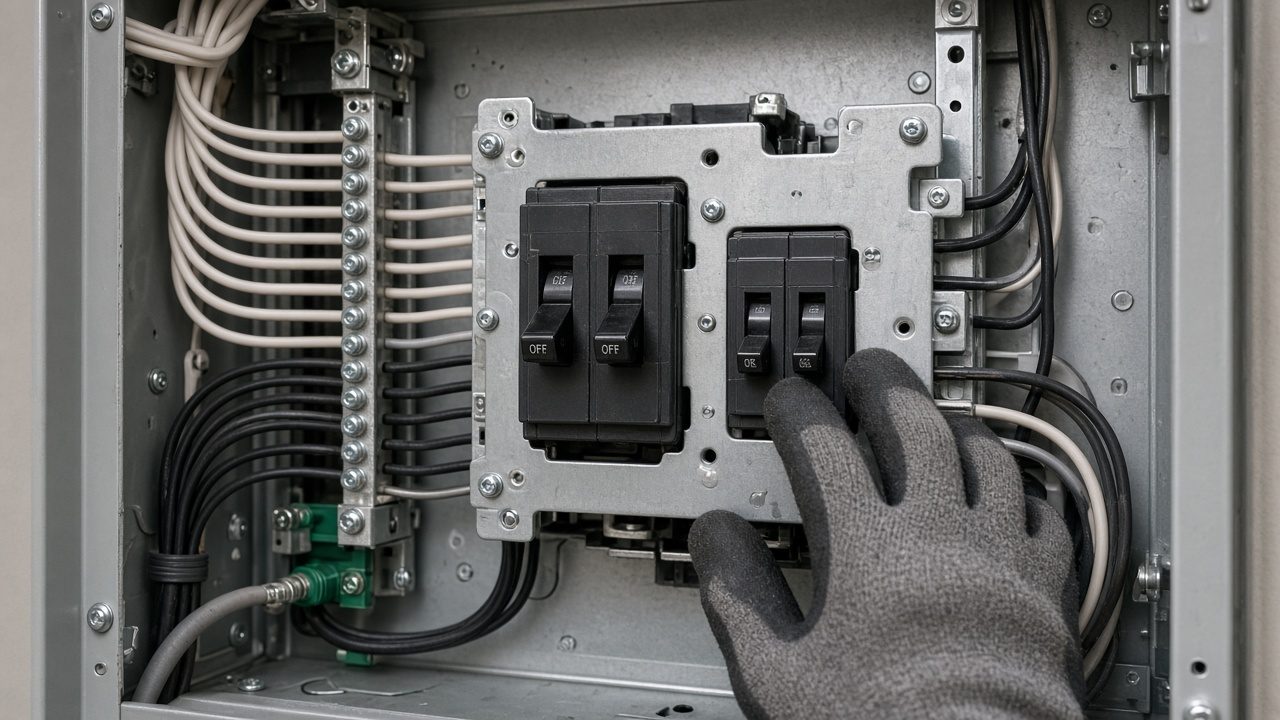
An interlock is a metal plate at the panel. It lets the main breaker be on, or the generator breaker be on, not both. You still choose which branch breakers to leave on so the generator is not asked to run the whole house.
A transfer switch is a separate enclosure. It moves selected circuits from utility power to generator power. It costs more and it holds a fixed list of circuits. Either one is a real transfer switch arrangement in the broad sense people search. We say which hardware fits the panel after we open it. A panel with no space and no legal place for the kit is a panel upgrade first.
What the panel has to have
The panel needs a space for a two-pole breaker, a cover that the interlock can bolt to, and lugs that are tight. Some older panels have no listed interlock. Some are full. Some are brands we will not add a generator breaker to because the bus is already a problem.
If the panel cannot take the kit, we say that on the visit. Running a generator into a panel that is hot, rusty, or out of spaces does not make the outage plan safer. The generator work waits until the panel can accept it.
A portable generator and a standby generator
A portable unit sits outside, you start it, and you plug in the cord. A standby generator starts on its own and sits on a pad with a fuel line. The electrical side of a standby unit is still a transfer switch and a connection at the service. The fuel line and the pad are part of that job, not an extension cord.
Polk County houses lose power in summer storms more than they lose it in a winter freeze. Either machine is useless if the connection was never permitted or never keeps the utility and the generator apart. We install the electrical side. We do not tell you a portable cord is the same thing as a standby generator.
The loads you can actually run
A 5,000 watt portable generator does not run a central air conditioner, an electric range, and a water heater at once. It will run a refrigerator, some lights, a few fans, and maybe a small window unit if nothing else large is on. The interlock does not add watts. It only makes the connection safe.
On the visit we list what you want on during an outage and we say what the generator can carry. Turning every breaker back on because the cord is plugged in is how the generator stalls and how motors get damaged.
Where the generator has to sit
The machine stays outside, away from doors, windows, and the soffit vents that pull air into the attic. Carbon monoxide from a generator run in a garage, or with the cord fed through a cracked window, kills people in houses that still have the lights on. We will not land an inlet that only works if the generator sits in the garage.
The cord length is part of that decision. A short cord forces the generator against the wall. A listed outdoor cord of the right amp rating lets you place the exhaust where it does not blow back at the house. The inlet location and the parking spot for the generator get picked on the same visit.
When the utility power comes back
Turn the generator breaker off, slide the interlock, and turn the main back on. Then stop the generator. Leaving both sources able to meet is what the hardware is there to prevent. If you are not sure of the order, the plate on the panel door should say it in one sequence. We write that sequence on the visit.
The moment the utility closes back in is also when a spike often hits the house. A generator hookup does not replace surge protection. Houses that lost a well pump board or an air handler board in the last storm still need that device at the panel after the inlet is in.
A well, a freezer, or a medical device
Write those down before the outage. A well pump and a refrigerator can share a small generator if they do not start together. An oxygen machine or a medical refrigerator does not get left to chance behind a breaker someone might turn off. Those circuits go on the list we select, and they get a dedicated circuit if they are currently sharing a general lighting run.
A disconnect within sight of the generator is part of a standby installation, not an extra. It lets the machine be shut off without a walk back to the panel in the dark. We include it when the unit is a standby. A portable unit uses the inlet and the cord instead.
The permit and the order of work
This is a change at the service equipment. Polk County expects a permit on a transfer switch or an interlock tied to the panel. We pull it, do the work, and meet the inspection. A kit screwed on with no permit is a problem at the next sale and a problem if the connection is wrong.
Tell us whether you already own the generator, the wattage on the label, and whether the panel is in the garage or outside. Shop hours are Monday through Friday, 7:30 AM to 4:30 PM. The number is (863) 676-0198, or use the contact page. Florida master license EC0000873. The shop is at 15510 Hwy 27, Lake Wales, FL 33859.
More from us: all electrical services and the cities we serve.